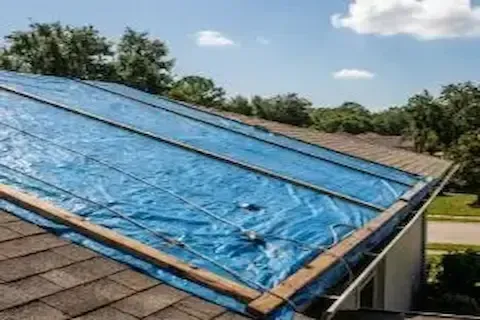
Tarp Coverage After Emergency Roof Damage Brooklyn Park
When a storm tears through Brooklyn Park and leaves a hole in your roof, the first priority is stopping water from getting inside. A professionally installed tarp buys time between the moment of damage and the start of full repairs, and that window matters more than most homeowners realize. Whether it is a fallen tree limb, hail that cracked ridge caps, or wind that peeled back a section of shingles, a tarp installed correctly can prevent thousands of dollars in secondary damage to your attic insulation, ceiling joists, drywall, and personal belongings below.
What Tarp Coverage Actually Involves
Many people picture a tarp as something you throw over a roof and call it a day. Professional tarp installation in Brooklyn Park is a more deliberate process. Crews assess the extent of the damaged area first, then select a tarp with enough material to extend well beyond the damaged section on all sides. A good installation covers not just the breach but also a generous margin of undamaged roofing to redirect water toward functioning gutters rather than letting it pool at the edges of the tarp itself.
The tarp is anchored using wooden battens or furring strips screwed along the edges rather than nailed, which allows for cleaner removal later without adding new penetrations. Weights and rope systems are typically avoided on steep-pitch roofs common in Brooklyn Park neighborhoods, where wind gusts off the Shingle Creek corridor can pull a loosely anchored tarp free within hours of installation. On lower-pitch roofs, sandbags or capped tubes may supplement the batten system along exposed edges.
Materials Used in Emergency Tarp Situations
Not all tarps perform equally. Residential emergency crews in Brooklyn Park typically use heavy-duty polyethylene tarps rated at six to twelve mils in thickness. Thinner tarps, often available at hardware stores, are not appropriate for multi-day or multi-week deployments because they degrade quickly under UV exposure and develop tears along fold lines. A tarp that fails after two days of rain has not done its job.
Silver or blue reinforced tarps are the most common in residential emergency work. Silver reflects more sunlight and holds up longer during extended Minnesota summers, while standard blue tarps are widely used for shorter-term coverage when repairs are scheduled quickly. Crews may also use specialized roof covers with grommeted edges when they anticipate the tarp needing to stay in place for several weeks pending insurance adjuster visits or material lead times.
For Emergency Roof Repair in Brooklyn Park, having the right material thickness matters especially during spring and fall when temperature swings stress the tarp membrane repeatedly over short periods.
How Local Weather Shapes the Approach
Brooklyn Park sits in a region where weather can shift from a sunny afternoon to a line of severe thunderstorms within a matter of hours. The National Weather Service regularly issues watches and warnings that move through Hennepin County quickly, and crews working in the area account for that unpredictability when they plan tarp installations. If a second storm system is approaching within twenty-four hours, the anchoring method changes. Battens are spaced closer together, overlapping sections are sealed with roofing tape, and low-slope areas receive additional material run-up to prevent windblown rain from wicking under the edge.
Winter in Brooklyn Park introduces additional complexity. When emergency damage happens in November through March, snow load becomes a factor. A standard tarp can trap snow and ice in a pocket over the damaged area, adding weight that stresses the already compromised roof deck. Experienced local crews pitch the tarp where possible to shed snow rather than collect it, and they use higher-grade materials that remain pliable in temperatures below freezing, unlike standard polyethylene that becomes brittle and prone to cracking.
What Homeowners Often Misunderstand About Tarp Coverage
One of the most common misunderstandings is that a tarp is a repair. It is not. It is a temporary protective measure designed to limit further damage while the actual repair is being planned and scheduled. Homeowners sometimes see the tarp in place and feel the urgency lift, which can lead to delayed inspections or late insurance filings. Most insurance policies in Minnesota require that reasonable steps be taken to prevent secondary damage, and a tarp satisfies that requirement, but it does not substitute for professional repair and does not reset any claim deadlines.
Another misconception involves doing the work yourself. Some homeowners attempt to install a tarp from a ladder the same evening damage occurs, often in poor light and after rain has made the roof surface slippery. The risk is significant. Professional crews in Brooklyn Park carry safety equipment, work in pairs, and have experience moving across damaged decking that may have compromised structural integrity beneath the surface. The cost of a professional tarp installation is consistently lower than the cost of a fall injury or a tarp that fails because it was not secured correctly.
Understanding the summer storm urgent response approach used by local roofing crews helps set realistic expectations for timing, especially after widespread storm events when multiple properties in the area need attention simultaneously.
The Timeline Between Tarp and Full Repair
In Brooklyn Park, the time between emergency tarp installation and full repair completion can range from a few days to several weeks depending on the situation. Factors include the severity of the underlying damage, insurance adjuster scheduling, material availability, and permit requirements for larger structural work. During that period, homeowners should check the tarp condition after any wind event and report visible shifts or edge separation to their roofing contractor promptly.
Crews that install tarps in the Brooklyn Park area will often conduct a follow-up check within the first week to verify the installation has held and make any adjustments. This is particularly important after the area experiences the kind of sustained winds that move through the Osseo and Maple Grove corridor and into Brooklyn Park neighborhoods along the northern suburbs. Minor adjustments early prevent major tarp failures later.
Working With Insurance During the Tarp Period
Document everything before the tarp goes on if it is safe to do so. Photos of the damaged area from ground level, the attic interior showing water intrusion, and any personal property affected are all useful during the claims process. After the tarp is installed, keep the invoice from the roofing company. Most homeowners insurance policies in Minnesota cover emergency tarp installation as part of the claim for the original storm damage, and having that documentation organized from the start avoids back-and-forth with adjusters later.
Brooklyn Park homeowners dealing with storm damage frequently work with multiple parties at once, including their insurer, their mortgage company if an escrow check is involved, and the roofing contractor performing both the tarp work and the eventual repair. Keeping clear records of each step and each communication makes the process move more predictably and helps ensure that the temporary protection you put in place is recognized as part of your overall response to the loss.
