Summer Storm Emergency Roof Repair Brooklyn Park MN
Brooklyn Park sits directly in the path of some of Minnesota's most aggressive summer weather. From late June through August, fast-moving thunderstorms roll in off the prairie, carrying hail, straight-line winds, and driving rain that can strip shingles, split ridge caps, and drive water into attic spaces within minutes. When that happens, the clock starts immediately. The longer a roof breach stays open, the deeper the damage spreads—from decking to insulation to drywall and framing. Understanding how summer storm emergency roof repair works in Brooklyn Park helps you act quickly and protect your home before a bad situation becomes a catastrophic one.
What Summer Storms Actually Do to Roofs in Brooklyn Park
Minnesota summer storms are not mild events. The thunderstorm season here regularly produces hail ranging from pea-size to golf-ball diameter, and wind gusts during severe cells frequently exceed 60 miles per hour. That combination creates specific and predictable roof damage patterns.
Wind-driven hail impacts the granule surface of asphalt shingles, knocking loose the protective coating that shields the fiberglass mat underneath. You may not see this damage from the ground, but it significantly reduces the lifespan of any shingle it contacts. More immediately, high winds peel back shingle tabs, lift ridge caps, and in severe cases tear full sections of roofing away from the decking. Flat or low-slope sections over additions and garages are especially vulnerable because they have less structural resistance to uplift pressure.
Rain follows wind in most summer storms, and once the roof membrane is compromised, water finds its way in fast. Within a single storm event, you can go from minor shingle damage to a soaked attic, saturated insulation, and water tracking down interior walls. The structural damage potential climbs sharply once wood framing stays wet for more than 24 to 48 hours.
First Steps After a Storm Hits Your Home
Once the storm passes and it is safe to go outside, your priority is damage assessment without taking personal risk. Walk the perimeter of your home and look for obvious signs of roof damage: missing shingle sections, exposed decking, debris from gutters or ridge caps on the ground, or dented metal flashing around chimneys and vents. Do not climb onto the roof yourself. Wet roofing surfaces are extremely slippery, and damaged decking can give way underfoot.
If you see clear evidence of a breach—missing shingles over a large area, a visible hole, or active water entry into the attic—call for emergency roof repair before anything else. A qualified crew can get a tarp in place quickly, which stops water infiltration immediately and gives you time to assess the full scope of damage without the situation worsening overnight.
Document everything before any work begins. Take photos or video of the exterior damage, any interior water intrusion, and the condition of gutters and surrounding landscaping. This documentation is essential for insurance purposes and helps your contractor build an accurate repair scope.
How Emergency Tarping Works and Why It Matters
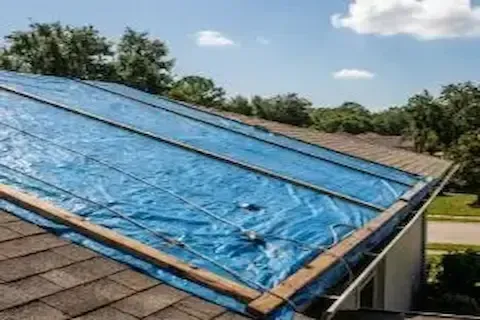
Emergency tarping is the standard first response to storm roof damage in Brooklyn Park, and it is more involved than throwing a blue tarp over a bad spot. Done correctly, it requires anchoring the tarp in a way that holds against wind without creating new damage to the surrounding roof surface. Crews use weighted boards and secured fasteners to stretch the tarp flat, ensuring it sheds water rather than collecting it in pools that add weight and stress to already compromised decking.
A properly installed emergency tarp can remain in place for weeks while you work through insurance claims and schedule permanent repairs. It protects the interior of the home from further water entry, gives the existing wet materials a chance to dry out, and preserves the condition of surrounding undamaged roofing so that the repair scope stays manageable.
Tarps installed carelessly—draped loosely, folded unevenly, or anchored with staples that pull through wet shingles—do little to stop water and can actually funnel rain into seams and gaps. This is why professional emergency response matters even for what seems like a temporary fix. For more on knowing when to make the call, read about when emergency roof help makes sense for homeowners facing storm damage.
Navigating Insurance After a Summer Storm
Most standard homeowner's insurance policies in Minnesota cover storm damage from hail and wind, but the claims process has specific requirements that matter from the moment damage occurs. Calling your insurer promptly to open a claim is step one. Most policies have provisions that require timely reporting and require you to take reasonable steps to prevent further damage—this is exactly what emergency tarping accomplishes and why documenting it helps your claim.
When the insurance adjuster comes out, your emergency contractor's initial assessment can support your claim by identifying damage that isn't visible from the ground. A contractor experienced with summer storm emergency roof repair in the Brooklyn Park area will know how to identify hail impact patterns, wind uplift damage, and water infiltration points that adjusters may not flag on their own.
Do not accept a settlement that only covers visible surface damage if your inspection showed decking or structural issues. Full repair coverage should address the complete scope of what the storm caused, not just what was easy to spot from a ladder.
Local Conditions That Shape Summer Storm Repair in Brooklyn Park
Brooklyn Park's position in Hennepin County places it in a climate zone where summer storm frequency is genuinely high. The area sits near corridors where atmospheric conditions regularly support severe convective storms, especially in July and August. Roofing contractors working in this market deal with storm repair calls regularly and understand the pace that post-storm response requires.
Local factors like mature tree canopy in established Brooklyn Park neighborhoods mean falling branches are a common secondary hazard during storms. Impact damage from branches can punch through decking and create large openings that go well beyond shingle loss. The repair complexity and cost climb substantially when structural decking is involved, which is another reason early professional assessment is important.
Local Emergency Roof Repair crews familiar with Brooklyn Park neighborhoods can respond efficiently, know local material suppliers, and understand permit requirements through the city—all of which matters when you need work completed quickly and correctly.
Getting from Emergency Response to Permanent Repair
Emergency tarping stabilizes the situation, but it is not the end of the process. Once you have an insurance claim open and an adjuster's visit scheduled, your contractor can move toward scoping the permanent repair. In most cases this includes full shingle replacement over the damaged sections, inspection and replacement of any compromised decking, and assessment of flashing, ridge caps, and ventilation components that took impact during the storm.
Summer repair schedules in Brooklyn Park can fill up quickly after major storm events because multiple neighborhoods experience damage at the same time. Getting on a contractor's schedule immediately after emergency stabilization—rather than waiting for the insurance process to fully complete—positions you for faster resolution and reduces the time your roof spends under a temporary tarp.
