When to Call for Emergency Roof Repair Brooklyn Park MN
A damaged roof doesn't always announce itself with a dramatic collapse. More often, the warning signs show up quietly — a small water stain on the ceiling after a rainstorm, a gap where shingles once were, or a soft spot in the decking you notice only when you're up there cleaning gutters. In Brooklyn Park, MN, where weather can shift from a calm spring afternoon to a hail-driving thunderstorm within hours, knowing when a roofing issue crosses from routine maintenance into genuine emergency territory can be the difference between a manageable repair bill and a full structural replacement.
What Makes a Roof Situation a True Emergency
Not every roofing problem demands an immediate phone call. A handful of missing shingles on an otherwise intact roof, for example, can often wait a day or two for a scheduled appointment. But certain situations create risk fast enough that waiting becomes genuinely dangerous — either to the people inside the structure or to the building itself.
The key factors that elevate a roofing problem to emergency status are active water intrusion, structural compromise, and exposure to incoming weather. If rain or snowmelt is currently entering the home, the clock is already running on moisture damage to insulation, ceiling joists, drywall, and anything stored in the attic. If a section of the roof deck has been punctured, lifted, or otherwise opened up, you're not just dealing with a leak — you're dealing with an entry point that will expand with every rain event, freeze-thaw cycle, or wind gust.
In Brooklyn Park specifically, the combination of cold winters, spring hail, and summer thunderstorms creates a local weather profile that puts roofs under repeated stress throughout the year. That stress accumulates, and older roofs that have been through ten or fifteen Minnesota winters are far more vulnerable to catastrophic failure during an acute weather event than a roof that was installed recently.
Specific Conditions That Require Emergency Response
Some scenarios are clear-cut. If a large tree limb has punched through your roof, that's an emergency. If a portion of your roof deck is visibly sagging from inside the attic or from the exterior, that's an emergency. If water is dripping directly into living spaces through the ceiling, that's an emergency. These are not borderline situations — they require same-day contact with a qualified roofing contractor.
Beyond the obvious, there are less dramatic situations that still warrant urgent attention:
Multiple shingles missing after a storm: A few exposed gaps mean the underlayment and deck are now taking direct weather exposure. In Brooklyn Park's climate, even a single unprotected night with rain is enough to begin moisture infiltration.
Flashing pulled away from a wall or chimney: Flashing seals the joints where your roof meets vertical surfaces. When it separates, water channels directly into the wall assembly. A chimney flashing repair walkthrough gives you a clearer picture of what's involved in that specific type of failure.
Ice dam formation with active interior leaking: Ice dams build up along the eaves in winter, forcing meltwater backward under shingles and into the structure. Once that water is inside, damage accelerates quickly.
Visible daylight from the attic: If you can see light coming through the roof deck from inside your attic, the integrity of the system has been breached. That's not a maintenance issue — it's an emergency.
Debris impact after high winds: Hail large enough to crack or dislodge shingles, or wind-driven debris that physically strikes the roof surface, can create damage that isn't visible from the ground but is allowing water in right now.
What Happens During an Emergency Roofing Call in Brooklyn Park
When you reach out for emergency service, a reputable local contractor won't just send someone to look at the damage and schedule a future appointment. The immediate goal is to stop active intrusion and secure the roof against the next weather event — whatever that happens to be.
The first step on-site is typically a safety and damage assessment. The contractor will identify how large the affected area is, whether the deck itself has been compromised, and what temporary measures will be most effective given the current and forecast weather. In Brooklyn Park, that assessment always accounts for what's coming next — if another storm system is rolling in from the west in 18 hours, the temporary repair needs to hold through that event, not just through a dry afternoon.
Temporary emergency measures commonly include:
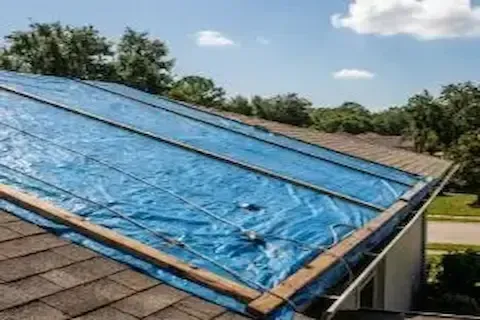
Securing heavy-duty tarps over exposed sections using battens or weighted fasteners that won't damage adjacent roofing
Applying emergency sealant or roof cement around failed flashing, cracked boots, or small punctures
Removing loose or displaced debris that could cause additional damage or become a projectile hazard
Boarding over sections where structural integrity has been compromised
The temporary fix buys time for a full assessment and proper repair planning. It does not replace the need for permanent repairs — it just stops the bleeding while those repairs are scheduled.
The Difference Between Urgent and Standard Repairs
Part of knowing when to call for emergency service is understanding what doesn't qualify. A roof with granule loss, minor curling at shingle edges, or a small amount of moss growth is deteriorating — but it isn't in emergency condition. These are maintenance concerns that deserve attention but can be handled through a normal scheduling process.
Similarly, a few isolated shingles that cracked during a hailstorm but haven't created an active leak may warrant urgent attention but not necessarily a same-day emergency call. The distinction matters practically because emergency service typically costs more and is structured around fast response rather than careful scheduling. If your situation genuinely warrants it, that cost is entirely justified. If it doesn't, you're better served by scheduling a prompt but standard inspection.
A useful rule of thumb: if active water is entering the structure, or if weather conditions in the next 24 to 48 hours will make an existing breach significantly worse, call immediately. If the damage is real but contained, and no additional weather is imminent, schedule a priority inspection rather than treating it as a same-day emergency.
Storm Season in Brooklyn Park and How It Changes the Calculus
Brooklyn Park sits in a part of Minnesota that sees meaningful hail activity during late spring and summer, significant wind events associated with thunderstorm systems, and periodic tornado warnings that bring debris loading and pressure changes roofs aren't designed to handle. In the winter, heavy snow accumulation, freeze-thaw cycling, and ice dam formation add entirely different stress patterns.
What this means practically is that emergency roofing situations in Brooklyn Park aren't rare edge cases — they're a predictable part of homeownership here. Having a basic plan in place before an event happens is far better than trying to figure it out at 11 PM during a thunderstorm with water coming through your ceiling.
That plan should include knowing where your shutoff is for any rooftop-related water intrusion, having the contact information for a local emergency roofing contractor saved in your phone, and knowing the location of your homeowner's insurance policy documents so you can initiate a claim quickly if needed. Most emergency repairs in Brooklyn Park that result from storm events are at least partially covered by standard homeowner's insurance, and documenting the damage promptly — with photos and a contractor's written assessment — strengthens any claim you file.
Choosing a Contractor for Emergency Roof Work
Not every contractor advertising emergency service actually means it. Some "emergency" services in this market involve someone showing up two days later to assess and then schedule future work. When you're dealing with active intrusion or structural exposure, that's not emergency service — that's a delayed inspection.
When evaluating a contractor for urgent work, the questions that matter most are: How fast can someone actually be on-site? What temporary protection measures do you carry on your trucks? Are you local to the Brooklyn Park area and familiar with the specific weather patterns and code requirements here? Do you work directly with insurance adjusters, or will that be left entirely to the homeowner?
Local contractors who operate in Brooklyn Park and the surrounding north metro have a practical advantage: they know what storms have moved through, what types of damage are common after specific weather events, and what insurance adjusters in this market are looking for during inspections. That local knowledge matters when you're moving quickly and the stakes are high.
For professional Emergency Roof Repair from a contractor who works in Brooklyn Park and the surrounding communities, getting a local team on-site fast is the single most important step when your roof system has been compromised.
After the Emergency: What Comes Next
Once the immediate situation is stabilized, the work isn't done. A thorough post-emergency inspection needs to cover not just the area that was visibly damaged but adjacent sections that may have sustained secondary damage. In many cases, a hailstorm or wind event that creates one obvious failure point has also created smaller, less visible issues elsewhere on the roof that will develop into new problems within one or two additional weather cycles.
That full assessment should inform a permanent repair or replacement plan, a documented record for insurance purposes, and a realistic timeline for completing the work before the next seasonal stress period hits. In Brooklyn Park, that typically means getting permanent repairs completed before winter if the emergency occurred in summer or fall, and before the following storm season if the work happened during the winter months.
Understanding what constitutes a roofing emergency, acting quickly when those conditions are present, and working with a qualified local contractor who can move fast and document carefully — that's the complete picture of how emergency roof situations get resolved well in Brooklyn Park, MN.
