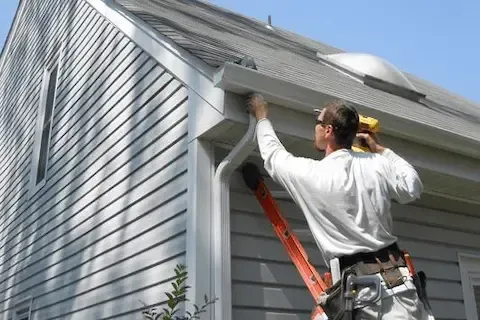
Gutter Guards With New Brooklyn Park MN Installations
When a Brooklyn Park crew installs new gutters on your home, adding gutter guards at the same time is one of the smartest decisions you can make. Labor is already staged, ladders are already positioned, and the channel is open before any fasteners go in. Retrofitting guards six months later means scheduling a second visit, paying for setup again, and risking minor damage to a system that has already settled into place. Pairing guards with a new installation eliminates that friction entirely and gives the finished system a cleaner, more integrated look from the first day.
Why the Combination Install Makes Sense in Brooklyn Park
Brooklyn Park sits in Hennepin County where mature oaks, silver maples, and cottonwoods drop leaf loads in waves from late September through November. By the time the last leaves fall, temperatures are often at or below freezing, making gutter cleaning a cold and hazardous chore. Guards reduce how often you need to climb a ladder in those conditions, which matters as much for safety as it does for convenience.
Local weather also creates freeze-thaw cycles that punish open gutters. Water that pools in a leaf-clogged channel freezes, expands, and forces the gutter away from the fascia. Ice dams form when that blockage prevents proper drainage across the roof edge. Guards keep debris out so water moves freely toward the downspout rather than stagnating and freezing near the roofline. That single function prevents a cascade of problems that lead to fascia rot, soffit moisture intrusion, and interior ceiling damage.
Guard Styles Commonly Fitted by Brooklyn Park Crews
Not every guard works equally well in every situation. The tree canopy surrounding your home, the roof pitch, and the gutter profile you are installing all influence which style performs best.
- Micro-mesh guards use a fine stainless-steel screen bonded to an aluminum frame. Water flows through the mesh while even small debris like maple seeds and pine needles stays on top and blows off. These are the most effective style in heavy-canopy neighborhoods and are worth the higher upfront cost when large trees overhang the roofline.
- Reverse-curve guards rely on surface tension to pull water around a curved nose and into the gutter while debris falls to the ground. They work well on standard-pitch roofs but can fail during intense Midwest rainstorms when volume exceeds what surface tension can handle.
- Perforated aluminum guards are a mid-range option with punched holes that allow water through while blocking larger debris. They perform reasonably well with deciduous trees but can let through small seeds and shingle grit that accumulate over time.
- Foam inserts fit inside the channel and allow water to percolate down while debris sits on top. They are the least expensive option but compress over time, trap moisture that encourages mold growth, and are rarely recommended for Minnesota climates where freeze-thaw cycles stress the insert material.
- Brush inserts use bristle cylinders that sit inside the gutter. Debris catches in the bristles rather than washing through, which means you still need to clean the gutter periodically. They are popular as a DIY add-on but do not perform at the level a professionally fitted frame guard achieves.
For most homes in Brooklyn Park with moderate to heavy tree coverage, a micro-mesh or quality perforated aluminum guard installed during the new gutter run is the combination local crews recommend most often. If you want to understand how the gutter profile itself affects guard compatibility, reviewing seamless versus sectional gutters compared will give you a clearer picture before you finalize your choice.
What the Installation Process Looks Like
When guards are added during a new gutter installation, the sequence is straightforward. The crew runs the gutter sections, sets the slope, secures the hangers, and attaches end caps and downspout outlets before laying guards across the top of the open channel. This order matters because guards installed over properly sloped gutters drain correctly. Guards installed over a sagging or poorly sloped retrofit job trap water at the low points regardless of how well the guard itself is built.
Micro-mesh guards are typically secured with a clip or screw system that tucks under the first course of shingles at the back edge and snaps onto the gutter lip at the front. That connection point is easier to access and align when the gutter is new and the installer controls the positioning from the start. On retrofit jobs, existing sealant, paint buildup, or deformed gutter lips can prevent a clean fit.
Crews working in Brooklyn Park also account for roof pitch when selecting guard angle. A steeper pitch increases water velocity coming off the roof, which can overshoot a flat guard and spill past the gutter entirely. Quality guards designed for steep-pitch applications have a raised nose or a specific mesh tension that redirects high-velocity water downward into the channel rather than across it.
Maintenance Expectations After Installation
Guards reduce maintenance but do not eliminate it entirely. Even the best micro-mesh guard will accumulate a thin layer of shingle grit and pollen over several years. Debris that does not blow off can form a compacted mat that slows water flow during heavy rain. A periodic visual inspection from the ground and an occasional rinse with a garden hose from the roof edge is typically all that is needed to keep a quality guard system performing correctly.
Most manufacturers of premium guards recommend a professional inspection every three to five years rather than annual gutter cleaning, which represents a significant reduction in long-term maintenance cost and time. If your Gutter Installation includes a micro-mesh guard with a solid warranty, confirm whether the warranty requires professional maintenance intervals to remain valid.
Cost Framing for the Brooklyn Park Homeowner
Adding guards during a new gutter installation typically costs less per linear foot than a standalone guard retrofit because setup costs are shared with the gutter job itself. The price varies by guard type, but most Brooklyn Park homeowners find that the combined project adds between fifteen and thirty percent to the base gutter cost depending on the guard style selected. Weighed against the cost of annual professional gutter cleaning, a well-chosen guard system often pays for itself within five to eight years, and does so while reducing ice dam risk that could otherwise lead to far more expensive roof and interior repairs.
Choosing a Guard That Fits Your Tree Situation
Before you commit to a guard style, walk your property and note which trees are within thirty feet of your roofline. Oaks hold their leaves late and drop large quantities at once. Maples produce seeds in spring that are small enough to penetrate coarser guard systems. Cottonwoods release cottony debris in early summer that can clog mesh if the weave is too fine. Sharing that tree inventory with your installation crew lets them match the guard specification to your actual debris profile rather than defaulting to whatever they have most of on the truck.
