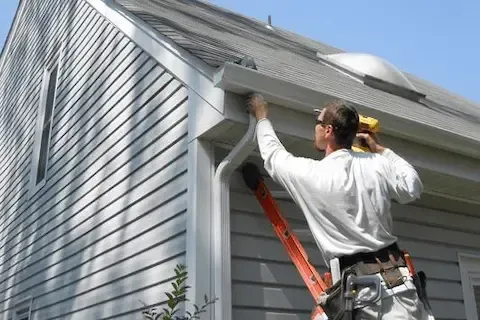
Seamless vs Sectional Gutter Installation Brooklyn Park
Choosing between seamless and sectional gutters is one of the first decisions Brooklyn Park homeowners face when replacing aging drainage systems. Both options move water away from your foundation and fascia, but they differ significantly in how they're manufactured, installed, and maintained over time. Understanding those differences before you schedule a crew helps you match the right system to your home's layout, your budget, and Minnesota's climate demands.
How the Two Systems Are Built
Sectional gutters are pre-cut into standard lengths — typically ten-foot segments — and joined together on-site using connectors, seam sealant, and fasteners. You can find them at big-box stores, and many homeowners attempt DIY installation with them. The trade-off is that every joint where two sections meet is a potential failure point. Sealant breaks down, metal expands and contracts through freeze-thaw cycles, and joints eventually separate.
Seamless gutters are fabricated on-site from a continuous coil of aluminum, steel, or copper using a roll-forming machine mounted in the installer's truck. The gutter is cut to the exact length of each run — no joints except at corners and downspout outlets. That single difference eliminates the majority of places where leaks typically start.
Performance in Brooklyn Park's Climate
Brooklyn Park winters are not mild. Temperatures regularly swing between single digits and the upper thirties within the same week, and that constant expansion and contraction is hard on any material with seams. Sectional gutters under that kind of thermal stress tend to separate at joints within a few years, especially on longer runs that span the full width of a home.
Seamless gutters handle freeze-thaw cycles better because there are fewer stress points along the run. They still require proper pitch and functional downspouts to drain efficiently before temperatures drop, but the structural advantage is real. For homes along the wetland edges near Edinbrook Park or on lots with significant tree canopy, a system that sheds debris without pooling at joints is a practical upgrade, not just an aesthetic one.
Installation Process and Timeline
Sectional gutter installation is straightforward. Segments are cut, aligned, sealed at every joint, and fastened to the fascia. A single-story ranch home might take a few hours. The process doesn't require specialized equipment, which is why it's a common DIY project and why some contractors offer it at a lower per-foot cost.
Seamless gutter installation requires a roll-forming machine and trained operators. The crew measures each run, programs the machine, and produces gutters cut to the inch. Installation on a standard Brooklyn Park two-story home typically takes a half-day to a full day depending on the number of corners, valleys, and downspout locations. The equipment investment is significant, which is why seamless installation is always a professional job.
For Gutter Installation that includes proper pitch calibration and sealed end caps, professional installation eliminates the guesswork that leads to pooling and premature failure regardless of which system you choose.
Cost Comparison Over Time
Sectional gutters cost less upfront. Material and labor together run lower per linear foot than seamless systems. If you're managing a tight renovation budget or replacing gutters on a short-term rental, that initial savings matters.
Seamless gutters cost more at installation but tend to perform longer without maintenance calls. Over a ten- to fifteen-year window, the math often shifts in favor of seamless when you factor in sealant reapplication, joint repairs, and the occasional section replacement that sectional systems typically require. For owner-occupied homes in Brooklyn Park neighborhoods like Palmer Lake or Northgate, where homeowners intend to stay long-term, the durability math usually favors seamless.
Material Options Within Each System
Both seamless and sectional gutters come in aluminum as the standard option. Aluminum is lightweight, rust-resistant, and holds paint well. It's the dominant choice in the Minneapolis metro area because it handles moisture without oxidizing and is available in dozens of colors that can be matched to your fascia trim.
Steel gutters are heavier and more impact-resistant, which makes them worth considering on homes with significant roof pitch where ice and debris slide forcefully off the surface. Copper gutters sit at the premium end of both systems, developing a patina over time and lasting several decades when properly installed. Vinyl sectional gutters exist at the low end of the market but aren't well-suited to Minnesota winters — they become brittle in cold temperatures and tend to crack.
Maintenance Differences
Sectional gutters need periodic inspection at every joint. After a hard winter, it's common to find joints that have pulled slightly apart or where the original sealant has dried and cracked. Resealing is straightforward but needs to happen before the next heavy rain season to prevent water from running behind the fascia.
Seamless gutters still require cleaning — leaves, seeds, and shingle grit accumulate in any horizontal channel — but the maintenance list is shorter because you're not monitoring a series of joints along every run. End caps and corner connections should still be checked annually, but overall upkeep is lighter.
Understanding when to schedule that maintenance is easier when you've already read the fall gutter timing breakdown that outlines what Brooklyn Park crews recommend before freeze-up each year.
Which Option Fits Your Home
Sectional gutters make sense when you're working with a minimal budget, replacing a short run, or dealing with an unusual profile that makes on-site fabrication less practical. They're a functional choice when installed correctly and maintained consistently.
Seamless gutters are the better fit for most Brooklyn Park homeowners replacing full perimeter systems. The reduction in leak points, the cleaner profile along the roofline, and the longer service life between repairs justify the higher upfront cost for homes where you're planning to stay or where curb appeal affects resale value. Custom-fabricated lengths also mean fewer awkward cuts around bay windows, dormers, and complex roof geometry — common features on the split-levels and ramblers built throughout northern Brooklyn Park in the 1970s and 1980s.
Your installer should walk each elevation of your home, note the pitch and drainage direction, and specify downspout placement before fabricating anything. A system sized and pitched correctly from the start protects your foundation, your fascia, and your siding without requiring seasonal intervention.
