Early Fall Emergency Roof Repair in Brooklyn Park MN
September in Brooklyn Park can fool you. The weather turns crisp, the leaves start shifting color, and it feels like summer's chaos is finally behind you. Then a line of fast-moving storms rolls through, and suddenly you're staring at missing shingles, a cracked ridge cap, or water dripping into your attic before the first frost even arrives. Early fall roof emergencies are common in this part of Minnesota precisely because the transition season brings unpredictable weather that can hit roofing systems hard — especially those already worn down from a full summer of heat and UV exposure.
Why Early Fall Creates Roof Vulnerability in Brooklyn Park
The stretch from late August through October is deceptively rough on roofing materials. Summer heat causes asphalt shingles to expand repeatedly, making them brittle at the edges and more susceptible to wind lift. By the time the first autumn storms roll through, shingles that look intact from the street may already be failing at the fasteners or seams. Brooklyn Park sits in a corridor that regularly sees sharp pressure drops and high-wind events in early fall, particularly in years when late-season thunderstorms extend well into September.
Additionally, tree canopy in established Brooklyn Park neighborhoods like Edinbrook and Palmer Lake means falling limbs are a real hazard during high-wind events. A branch doesn't have to be massive to crack a ridge board or punch through aging decking. Even a glancing strike can displace enough shingles to create an open pathway for water intrusion the next time rain falls — which in fall, can happen every few days.
What Happens When Fall Roof Damage Goes Unaddressed
The timing of a fall roof emergency matters more than most homeowners realize. A damaged roof in spring or summer gives you a buffer. A damaged roof in early fall in Minnesota does not. Once temperatures drop below freezing consistently — typically by late October or November in the Brooklyn Park area — several problems accelerate rapidly:
- Water that entered the roof cavity freezes and expands, widening cracks in the decking and forcing open gaps in flashing
- Moisture trapped in insulation loses its thermal value, raising your heating costs through winter
- Ice dams become more likely when the attic temperatures are already dysregulated from compromised roofing
- Mold and rot set in quickly in damp attic spaces that don't dry out before cold weather seals everything in
What starts as a manageable shingle repair in September can turn into a full decking replacement by spring if it's left exposed through a Minnesota winter. Acting during the fall window — even if conditions aren't ideal — almost always costs less than waiting.
How Emergency Roof Repair Crews Respond in Fall Conditions
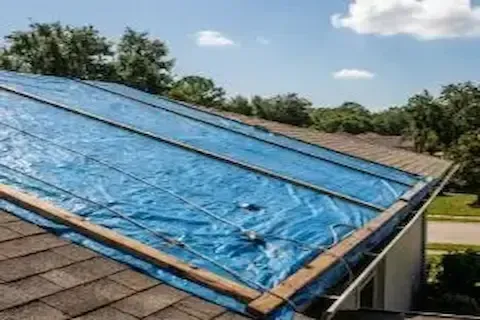
Experienced local roofing crews understand that fall emergencies require a two-phase approach. The first priority is stabilization. That typically means getting a proper tarp secured over the damaged area — not a hardware store tarp thrown loosely across the peak, but a secured installation that can withstand 40 to 50 mph wind gusts, which are common in the Brooklyn Park area through November. For more on how that process works, tarp coverage after storm damage explained walks through what professional temporary protection actually involves.
The second phase is the permanent repair itself, which must be scheduled while temperatures still allow adhesive products to cure properly. Roofing sealants and modified bitumen materials need minimum temperatures to bond effectively. Most manufacturers specify above 40°F for standard installations, and ideally above 50°F for dimensional shingle work. In Brooklyn Park, that window narrows fast. A crew responding in early October still has a reasonable repair window. By late October, they may be working in marginal conditions. By November, some repairs require specialized cold-weather materials and additional labor.
Common Mistakes Homeowners Make After Fall Storm Damage
When a storm hits and you discover roof damage, the instinct to fix it yourself or delay the call is understandable — but it leads to predictable problems. Here are the mistakes that end up making early fall damage worse:
- Waiting for a clear weather window: Fall weather in Brooklyn Park doesn't always give you a long dry stretch. Waiting for perfect conditions means waiting too long.
- Using inadequate temporary coverings: Plastic sheeting stapled to the edge or a single layer of lightweight tarp rarely survives a week of fall wind. Water finds its way through within days.
- Assuming insurance will cover a slow response: Most homeowners insurance policies require you to take reasonable steps to prevent further damage. Delay can create coverage complications.
- Not inspecting after every storm: Fall often brings multiple storm events in quick succession. A shingle knocked loose in one storm becomes a larger opening in the next.
Local Considerations Specific to Brooklyn Park
Brooklyn Park has a range of housing stock — from older ranch-style homes in the West Broadway corridor to newer construction near 109th Avenue and the 610 interchange area. Older homes often have lower-slope roofing sections or aging flashing around chimneys and skylights that are particularly vulnerable in fall storm conditions. Flashing sealant on homes built in the 1980s and 1990s has often reached or exceeded its service life, meaning a moderate storm can displace it entirely.
Newer construction in Brooklyn Park isn't immune either. Homes built during high-volume construction years sometimes show early wear on roofing systems due to material variations or installation practices from that period. If your home is in the 10- to 15-year age range, a fall storm is a reasonable trigger to get a professional eye on the full roof surface — not just the visibly damaged areas.
Getting the Right Response Before Winter Sets In
The most important thing you can do after early fall storm damage in Brooklyn Park is contact a roofing crew that operates locally and understands the seasonal pressure. National contractors may not prioritize your job the way a crew based here will — and the timeline between a call and a completed repair matters enormously once the calendar turns to October.
Emergency Roof Repair services from a local crew mean faster assessment, faster tarp installation if needed, and a repair completed while the weather still cooperates. The fall window in Minnesota is real and finite. Using it well is what separates a roof that survives winter intact from one that turns a manageable fix into a major project come spring.
