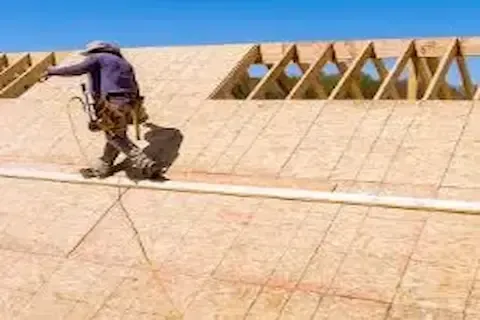
When Does a Brooklyn Park MN Roof Deck Need Replacement
A Brooklyn Park MN roof deck needs replacement when the structural sheathing—typically OSB or plywood—shows rot, delamination, excessive moisture, soft spots, or visible sagging. These conditions mean the deck can no longer hold fasteners properly or support shingle load safely. Minnesota's freeze-thaw cycles and heavy snow loads accelerate deck deterioration faster than in milder climates. Some damage calls for full deck replacement; localized damage may allow partial panel replacement. A licensed roofer should probe the deck during any reroof to identify compromised sections before new shingles go down.
What Are the Most Common Signs a Roof Deck Needs Replacement?
The clearest warning signs are ones you can see or feel during a roof inspection. Local roofers in Brooklyn Park consistently flag these conditions:
- Soft spots underfoot – When a roofer walks the roof and the sheathing compresses or flexes, the wood fibers have broken down from moisture.
- Visible rot or discoloration – Dark staining, black streaks, or crumbling edges on plywood or OSB panels indicate fungal decay that weakens the entire panel.
- Delamination – OSB and plywood are engineered in layers. When those layers separate, the panel loses load-bearing capacity even if the surface looks intact.
- Sagging between rafters – Viewed from inside the attic, sheathing that bows downward between framing members is a structural signal that replacement is overdue.
- Fastener pull-through – If nails or screws no longer hold in the panel, the wood has lost density. New shingles nailed into compromised decking will not stay secure through a Minnesota winter storm.
How Does Minnesota's Climate Contribute to Deck Deterioration?
Brooklyn Park sits in a climate zone where temperatures can drop below zero Fahrenheit in January and rise above 90°F in July. That range creates repeated freeze-thaw stress on every component of your roofing system. When ice dams form along eaves—a frequent problem in Hennepin County neighborhoods—water backs up under shingles and saturates the deck edge. Over multiple seasons, that saturation causes the OSB or plywood to swell, delaminate, and eventually rot. Heavy snowpack adds sustained dead load that accelerates deflection in panels that have already lost stiffness from moisture cycling. These conditions make deck inspection critical at every Brooklyn Park reroof, not just when obvious damage is visible.
Does All Deck Damage Require Full Replacement?
No. The extent of replacement depends on how widespread the damage is across the roof plane. Roofers use a simple field method: probe the deck with a screwdriver or awl across the entire surface during tear-off. Panels that accept the probe easily—where the tool sinks in without resistance—are compromised and must come off. Panels that resist the probe and show no soft spots, staining, or delamination can remain. Partial replacement involves cutting out individual 4x8 panels and sistering new sheathing to the existing rafter layout. Full replacement is warranted when damage covers more than roughly a third of the deck, when rot has spread to multiple adjacent panels, or when the original sheathing is undersized for today's load requirements. For Roof Deck Replacement in Brooklyn Park, the standard is to replace every flagged panel rather than leave borderline material under new shingles.
What Does Water Damage Look Like on a Roof Deck From Inside?
Attic inspections reveal deck problems that are invisible from the exterior. Inside a Brooklyn Park home, compromised sheathing shows up as:
- Water stains on the underside of panels – Brown or rust-colored rings indicate repeated wetting and drying cycles.
- Active daylight through gaps – If you can see light coming through the deck, sheathing panels have separated or deteriorated to the point of opening.
- Mold or mildew growth – Black or green growth on the attic side of the deck signals prolonged elevated humidity, often caused by inadequate ventilation combined with minor leaks.
- Rust on nail heads – Nails that have oxidized and stained the surrounding wood indicate repeated moisture contact at the fastener point, weakening holding power over time.
These interior signs often appear before exterior sagging becomes visible, making attic access an important part of any roofing evaluation in Hennepin County homes.
When Is Deck Replacement Required by Code or Insurance?
Minnesota's residential building code requires that roof sheathing meet minimum thickness standards for the rafter span and roofing product being installed. If existing sheathing is 3/8-inch plywood on a wide rafter spacing, a reroofing permit may require upgrading to 7/16-inch OSB or 1/2-inch plywood to meet current span tables. Brooklyn Park building inspectors enforce these requirements when permits are pulled for reroof projects. On the insurance side, adjusters writing hail or wind claims often include deck replacement line items when panels are visibly damaged or when the existing deck cannot accept new fasteners per manufacturer requirements. If your insurer is paying for a new roof after a storm, ask the adjuster to document any deck damage separately so replacement panels are covered. You can also review the roof deck replacement overview to understand what the full scope of work typically involves on a Brooklyn Park home.
How Do Roofers Decide Between Repair and Full Deck Replacement on the Same Job?
The decision comes down to three factors: damage coverage, panel integrity, and cost efficiency. If probing reveals isolated soft spots in two or three panels out of thirty, targeted replacement makes economic sense. If more than a third of panels fail the probe test, full replacement is usually more cost-effective because mobilization costs are already absorbed by the reroof project. Roofers also consider whether mixing old and new sheathing creates uneven nailing surfaces that could telegraph through new shingles. In Brooklyn Park, where homes built in the 1970s and 1980s often have original OSB or board sheathing, full replacement is the more common outcome simply because decades of Minnesota weather have degraded the original material uniformly across the deck.
